The short version
- How your child looks and behaves matters more than the number
- Any fever in a baby under three months needs same-day assessment
- A rash that does not fade when pressed with a glass is a 000 call
- Treat discomfort, not the number — a comfortable child with 39°C needs no medication
Fever is a response, not a disease
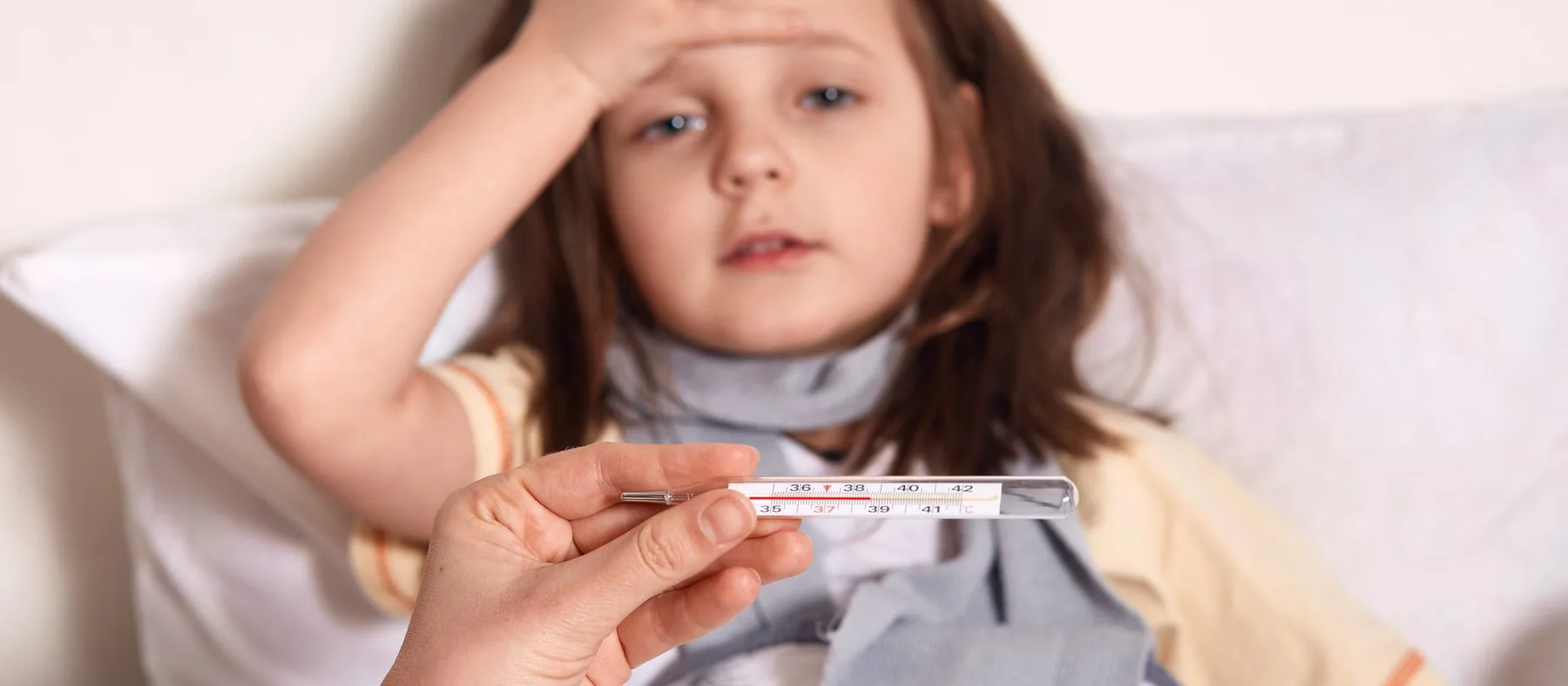
A fever means the immune system is doing its job. In otherwise well children, the height of the temperature correlates poorly with how serious the illness is — a child can be quite unwell at 38°C and perfectly fine at 39.5°C.
What clinicians actually assess is how the child looks and behaves: are they alert, drinking, interacting, and settling when the fever comes down?
Ring for a same-day appointment if
- Your baby is under three months and has any fever — this one is not negotiable
- They are drowsy, floppy, or unusually hard to wake
- They are refusing fluids, or have had very few wet nappies
- Breathing looks like hard work — ribs sucking in, nostrils flaring, grunting
- The fever has lasted more than three days
- They have a fever plus a limp, or will not use a limb
- Something simply seems wrong to you
That last one is not a courtesy. Parental concern is a recognised clinical warning sign, and it is taken seriously here.
Call 000 without waiting if
There is a rash that does not fade when you press a glass against it; a seizure; severe breathing difficulty; a child who is unresponsive or cannot be roused; or a stiff neck with sensitivity to light in an older child.
Managing fever at home
Treat your child, not the thermometer. If they are comfortable, playing and drinking, they do not need medication regardless of the reading.
If they are miserable, paracetamol or ibuprofen dosed by weight — not age — can help. Do not alternate the two routinely without advice, and never give aspirin to a child. Offer fluids often and in small amounts; a child who is drinking is a reassuring sign.
Cool baths, fans and stripping a shivering child are not recommended — they cause distress without helping.
Febrile convulsions
These are frightening to witness and usually harmless. They occur in a small proportion of young children, typically with a rapid rise in temperature.
If it happens: put your child on their side on a safe surface, do not put anything in their mouth, and note the time. Call 000 if the seizure lasts more than five minutes, if it is their first one, or if they do not recover normally afterwards. Any child who has had one should be assessed.
We are open seven days, which matters when a child goes downhill on a Saturday. See children's health.
Common questions
The number matters less than how your child looks and behaves. Any fever in a baby under three months needs same-day assessment regardless of the reading.
No. If your child is comfortable, drinking and playing, medication is not needed. Treat discomfort rather than the number, dosing by weight.
Related services